
Friday Tactics: Counter Tops
Which teams thrive when the ball is kept in play?

You’re in your own-22, you kick, but the ball stays in play. Disaster. Well, maybe not. Do that against Bath and there’s a 14% chance they’ll score a try, do it against Vannes and that drops to just 0.9%. Do it against Leicester Tigers and there’s a 6.6% chance it’ll end in a try but they have a net positive outcome percentage of -18.4% (the worst last season in the Prem, URC, Top 14, or Pro D2). Net Positive Outcome (NPO) is the positive outcomes (penalty won + try scored) minus the negative outcomes (penalty conceded + turnover conceded). Using the excellent data of Oval Insights, let’s see what’s going on.
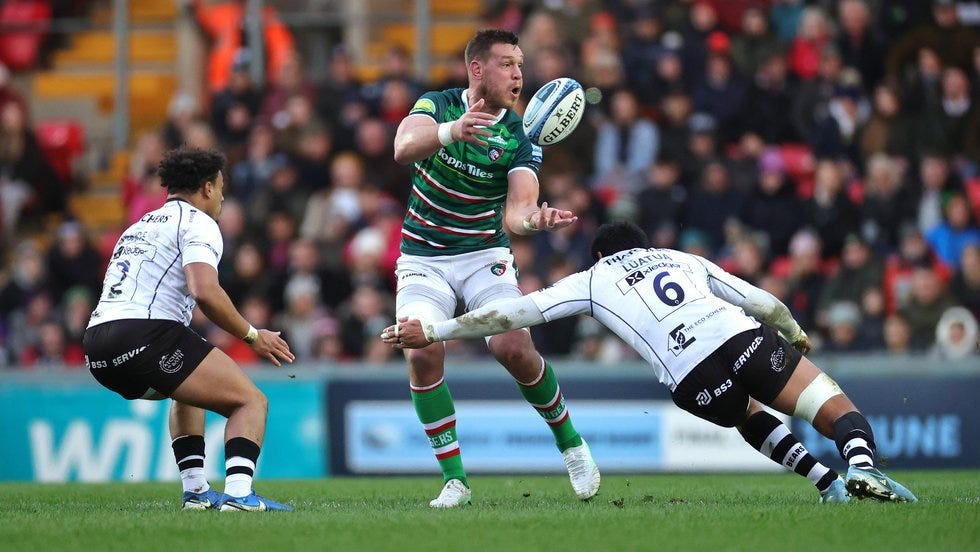
You don’t always have a choice as to what your opposition can do in rugby. But, one area where you do generally have that choice is how you clear your lines from within your own 22. You can clear to touch - typically sacrificing a little distance or you can clear and keep the ball in play - creating a dynamic situation you then have to defend.
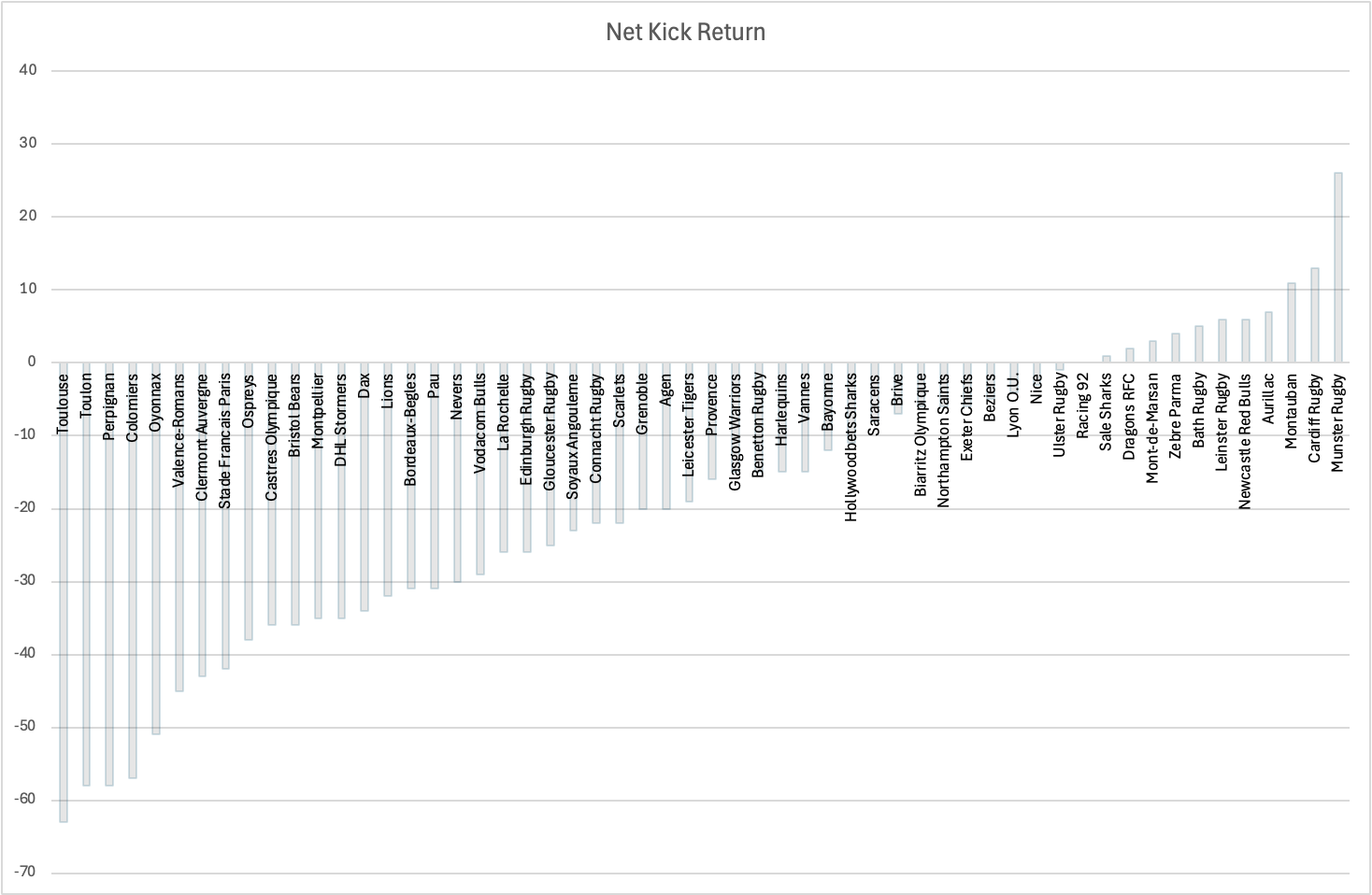
We can see what teams are allowed to do in these situations. A negative score here means you get more lineouts than kick returns; in the case of Toulouse you get 63 more linouts than you get kick returns. Whereas Munster get 26 more kick returns than lineouts in the same situation. You might therefore think that kick returns have a much better expected outcome given that opponents try very hard to give up lineouts?
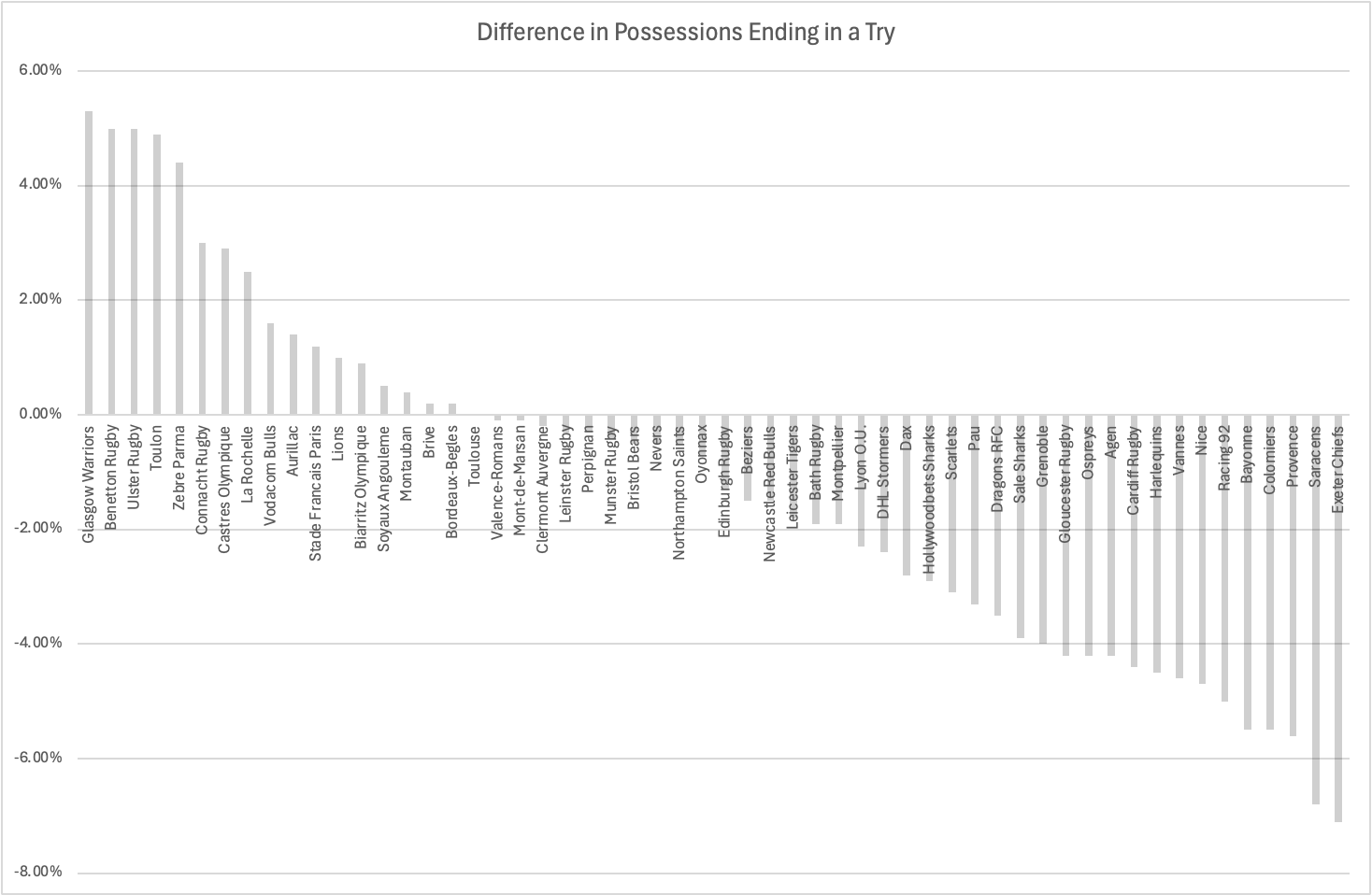
Well no. Teams on the left hand side here generate more possessions that end in tries from kick returns than from lineouts. Glasgow Warriors for example score a try on 10.2% of kick returns but just 4.9% of lineouts. Exeter Chiefs, right down the other end, score tries on 3.9% of their kick returns versus 11% of lineouts. In short - keep the ball in play versus Exeter and stick it in the stands versus Glasgow.
We can go further than that. We can look at Potency (how often a team scores a try) and Accuracy (how often a team gets an NPO as explained above). Take Munster for example - their Potency is 5.2% of possessions end in a try from a kick return versus 5.6% from a lineout. That’s a marginal difference and doesn’t explain why so many teams keep the ball in play against them. However, they are wildly more accurate from kick returns than from lineouts; they have a NPO of 4.1% from kick returns and -23.9% from lineouts.
Munster join an illustrious club of 13 who are both more potent than average and more accurate than average when their possessions start with a kick return. The other members are; Glasgow, Benetton, Ulster, Toulon, Zebre, Connacht, Lions, Soyaux-Angouleme, Brive, Toulouse, Beziers, and Bath. You might therefore think we shouldn’t kick to these 13. However, maybe they’re just overall very good at both kick returns and lineouts and maybe better at lineouts so even though your outcome probably won’t be good, you might prefer to give them a kick return rather than a lineout.
What we want to see are the teams who are both more potent and more accurate when starting with a kick return compared to a lineout. I.e. a team who performs better by both metrics when returning kicks than when starting with a lineout. There are only six teams who fit this requirement; Glasgow, Benetton, Ulster, Toulon, Zebre, and Connacht. It seems like this is known about Toulon, they receive the second lowest net kick returns (i.e. they have many more lineouts than kick returns). Unusually, Zebre get more kick returns than lineouts - I’d expect teams to try and change that this season and kick out for more lineouts.
We can also look at the flip of this. That is, teams who are both more potent and more accurate from lineouts than from kick returns. There are 23 of these - lineouts on balance are just a better attacking platform. I won’t go through them all. But we can look at the nine teams who fit into the above and also are above average at their lineout attack (by both potency and accuracy) they are: Beziers, Leicester Tigers, Scarlets, Grenoble, Cardiff, Racing 92, Colomiers, and Provence. In short, keep the ball in play against these teams because their lineout starts are more problematic than their kick return starts.
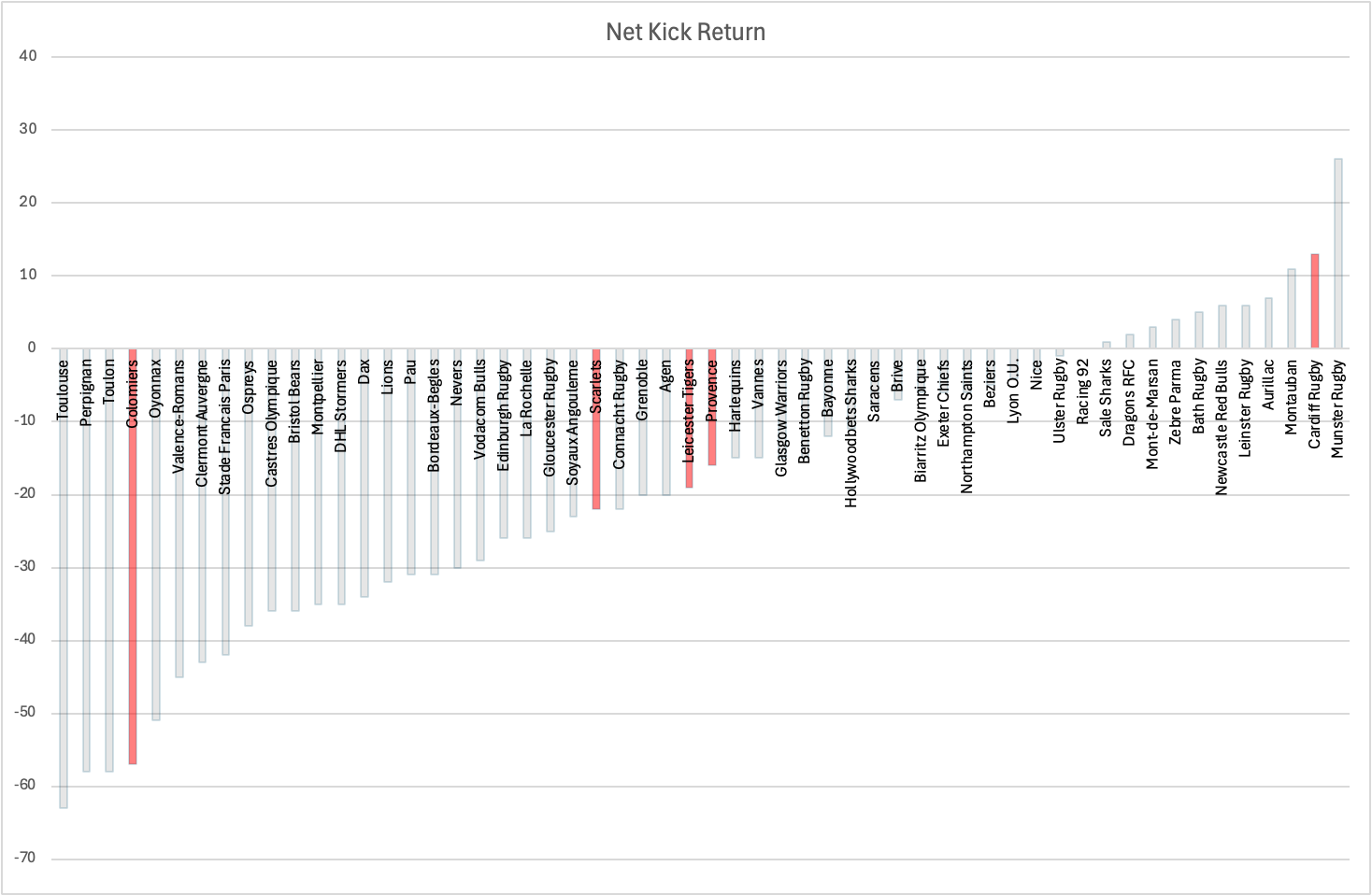
We can pick a few of these out here. Someone hasn’t got the memo to Colomiers’ opponents who keep feeding them the possession that they do best with. Cardiff’s opponents though have found the key and give them more kick returns at the expense of possession starts.
Conclusion
When you are in your own 22 you often, but not always, have a choice about whether you put the kick into touch or keep it in play. That judgement should by and large be based on what your opponent doesn’t want. A team like Toulon wants the ball kept in play because they perform better than if they have to start from a lineout. A team like Exeter Chiefs really want the lineout because they perform worse when the ball is kept in play. The real trick is making sure you’re able to improve the other possession start type so when a team removes your lineout you can pivot to having a good kick return. Plus, for defenses, it’s to keep up with what their opponents want and not giving them it.