
Hole Punchers
Where is the French power?

You have to earn the right to go wide. You earn that right by punching holes in the midfield, condensing the defence, then spreading the ball wide to the spaces opened up. Now that’s a bit of a tired old cliche but it has at least some truth. It is helpful to bend the defence to your will then you can run through the gaps that inevitably open up. How come, you might ask, do France cause all that damage when their forwards don’t bend the defence?
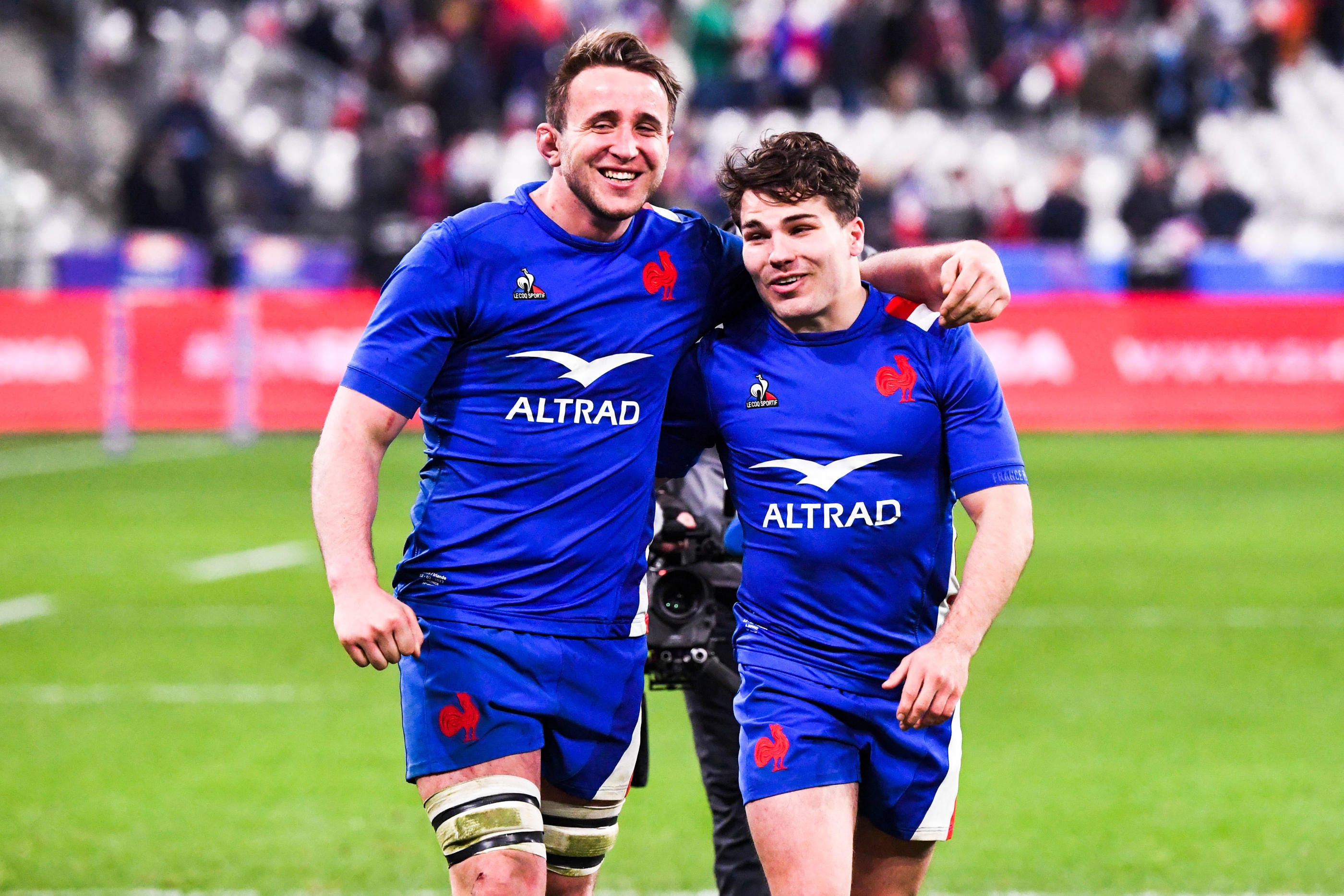
What do I mean when I say that? Well the French back row at this Six Nations, according to the excellent Oval Insights data, have the lowest gain line success rate (36.4%) and the fewest carries over the gain line (20). For context, Ireland lead with a 58.7% gain line success rate from their back row. Look across the whole set of forwards and France are second worst (36.3%) and have the second lowest carries over the gain line (57). It’s not just the gain line, the French back row have the lowest defenders beaten and joint lowest clean breaks.
Are they….bad?
Unsurprisingly, my answer to this would be no. France’s back row predominantly operate as all court operators. They can carry well enough, they link-up play well (second most passes behind Ireland), and they have a higher rate of dominant tackles than anyone else. They are fully embracing the role of a modern back row who can do everything pretty well and some things exceptionally. The French aren’t the biggest carriers but everything else they do is top drawer.
There is another part to this though; France don’t really have the powerful back rows they might need to change this. Across the past two seasons, the only Frenchman in the top ten in the Top 14 by carries across the gain line is Gregory Alldritt. The other nine are Jack Willis, Billy Vunipola, Abraham Papalii, Beka Gorgadze, Rodrigo Bruni, Sione Kalamafoni, Pita Sowakula, Uzair Cassiem, and Facunda Isa. There are twice the number of ex-Scarlets as French players.
Eleventh on that list is Lenni Nouchi of Montpellier who has been involved in the opening three matches of the Six Nations. He might well be the future and he should be. He combines dynamism with heft and power and at just 22-years-old he’s got plenty of time to build into the side. The best case scenario for France is they can slot in a player like Nouchi and add defence bending gain line carries to what is already an elite back row.
Beyond the French focus, their back row shows that the old fashioned understanding of roles is out of date. It’s okay to have a few linking back rows or elite defenders or tireless workers if you have others in your fifteen who can do the big carrying. It’s why a player like Ellis Genge is so important to England. He allows a quicker back row to go to work without worrying they leave the team underpowered. That is explained excellently by James While in Planet Rugby. If you have brilliant players, play them and then fix their ‘weaknesses’ elsewhere.
Did you enjoy this? If so, I have a book out called Attacking the Space, you can get it in any bookshop or follow the links below:
Waterstones: https://www.waterstones.com/book/attacking-the-space/sam-larner/mike-prendergast/9781399625098
Amazon: https://www.amazon.co.uk/Attacking-Space-Inside-Tactical-Revolution/dp/1399625098
I think one other thing with french forwards, and it's especially obvious watching the Top14 or ProD2, is not just their willingness, but their desire to offload. There's long been a drive to increase ruck speed, and the pace of change between phases, but short-circuiting the breakdown loop via offload allows them to generate quick momentum and front foot ball to play off of, even without dominant carries.