
Long Read: Analysing Wales
Are there reasons for optimism?

Had I told you Wales scored 19.3pts per match and broke 20pts against Argentina, New Zealand, and Japan twice in their last eight games how would you have imagined that run of matches went? Probably not a -191pts difference? In those eight matches, Wales have won only one match and their last three matches have been a 73-0, 48-7, and 54-12 losses.
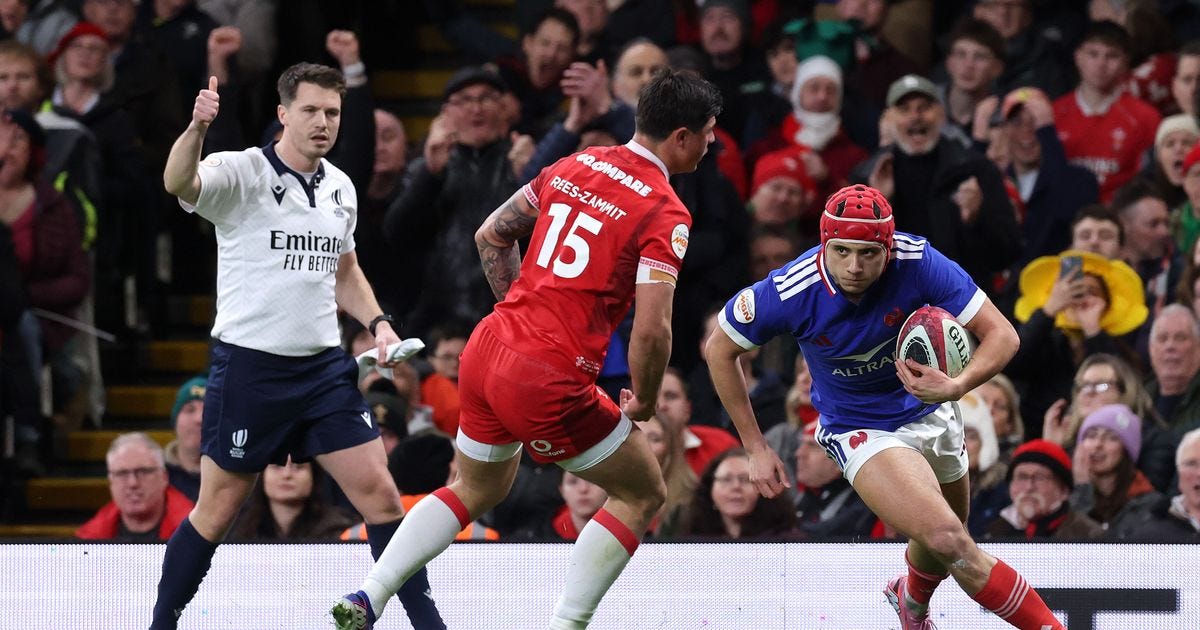
I was at the match in Cardiff yesterday and I was left with a feeling that didn’t seem to be matched by either my companions or the rest of the crowd, I was struggling to see reasons for optimism. So I decided to write down my thoughts and see if anything of note comes up.
Garbage Time
Against France, Wales were more than 14pts behind after 14 minutes. It was 18 minutes versus England and 30 versus South Africa. Against New Zealand it wasn’t until minute 58 that Wales were effectively out of the game. In all three of their most recent matches, the result has been decided before half-time in two before the first quarter was up. That does change how we should analyse the Welsh performance. Against France they drew the second quarter 7-7 and against England they drew the third quarter 7-7. There are reasons for optimism in both those passages of play but of course the performance of England and France has been changed by the fact they are already victorious. Yesterday, France clearly began throwing more 50/50 offloads and playing in a devil may care manner in that second quarter which allowed Wales back in.
In both the most recent Six Nations matches the quarter following the ‘good’ Welsh quarter was a 12-0 loss versus England and a 28-0 loss versus France. This was reminiscent of New Zealand games of past where the All Blacks would be matched by their opponent for an hour of the 80 minutes but all the damage was done in the remaining 20 minutes. I remember speaking to an analyst for Namibia in 2019 who said that the biggest work-on was making sure they stayed focused all the way through to the half. If they played 35 minutes instead of 40 the result could go from respectable to embarrassing. In the 2026 Six Nations, Wales have stitched together one good half from two games of rugby but even that best half would’ve had them drawing 14-14, not winning. That also changes the watching experience, I am not expecting Welsh victories against England or France at present but I am expecting them to stay in the fight at least until the hour mark.
This should temper our hope as Welsh fans. It is a big step from being good for 20 minutes to being good for 60 minutes to being good for 80 minutes and beginning to sniff out wins once more.
Naivety
The first step to winning matches is to make yourself hard to beat. That requires relentless accuracy, intent, urgency, and tactical awareness to ensure that a team who are better than you are don’t get gifted easy tries. To do this, you have to understand where teams are trying to exploit you and plug them while the match is ongoing.
This is the first box kick of the game and leads to the first try of the game. The kick is a good one and allows Ellis Mee to compete with Louis Bielle-Biarrey in the air. But Bielle-Biarrey wins and slaps it back to Thomas Ramos who instantly realises he has a 2v1 against Eddie James with teammate Emilien Gailleton. Gailleton realises he is probably running into a trap so turns infield and gets France on the front foot. They will immediately spread the ball wide then score two phases later.
What do we see? We see an intent from France to attack the short side after a box kick. We see a winger competing and Thomas Ramos stood behind with vision of where to attack and we see two players either side waiting to be fed. There is clear intent and Wales will be hurt if they don’t continue to cover that threat.
Let’s look at the next box kick for Wales. This one is long with limited hang time but we have Mee chasing the kick with Alex Mann on the inside and Dewi Lake on the outside. Without watching the video you may already spot the issue. In the first case, Wales got away with it because they had Eddie James and Aaron Wainwright able to move laterally to cover. That’s a back and a mobile forward. Between them they just about manage to shut down the issue and pass it off to the inside defence.
In this case, because the kick is too long the pass to the outside is easier and it lets Bielle-Biarrey have a one v one against Lake in an 8m channel. A battle he obviously wins.
What follows is almost an exact replica of the first try where France spread the ball wide to look for gaps and this time they are successful. That is the two punch knock-out. First win the aerial battle and attack the short side, pull the defence over then spread the ball wide and hit the short edge and then run into space. Wales already had a warning about this on the first box kick, remember this is the second box kick of the game. The third one is a good long kick to touch from Williams, the fourth one is this.
This kick is better, it’s contestable again but either side of Mee is Rhys Carré and Olly Cracknell. But Mee can’t stop the first pass and as soon as that happens France are in their natural territory and simply pick off the forwards who are in space defending some of the most exciting players in World rugby.
Reminder, Wales have been caught out tree times by exactly the same thing. They’ve varied the length of kick but none of it has worked and they haven’t learnt. Which has taken the game away from them as they have conceded two tries from this. That was after a game against England where the aerial game was seen as a major weakness. There are things that could have been done though. Eventually they kicked very very short, which wasn’t hugely helpful but at least stopped this from happening. They also limited this kind of counter attack when Dan Edwards kicked, though again that didn’t pose too many problems for France either. Alternatively, they could have added another chaser onto the short side. That would have removed someone from the open side but would have plugged up the holes that France exploited. They could have adjusted how hard Mee chased the kick. In two of the above examples he got there quickly enough to contest the kick but didn’t win it and that removed him as a defender. Telling him not to compete but chase then slow would at least have kept him in the defensive line, even if it was exceptionally passive as a strategy. There were options.
Conclusion
This has been the challenge with Wales of late. I had no expectations that they would beat England or France but I was hopeful that they would stay in the game until the hour mark. Against France I didn’t think the Welsh back three could compete with the French back three in a man to man battle but I did think they could slow them down at least. It’s not really good enough to throw your arms in the air and say you were beaten by a better team. Every tier one team is better than Wales at the moment so to get back to respectability requires them to beat teams better than they are.
Look at Scotland on the weekend. They removed a strength England had and made it harder for them to win. They backed that up by being excellent across the park but even if they weren’t, they still would have made it harder for England to win. That is what Wales need to do against Scotland. They need to end the game with the feeling that they made Scotland work, that made them think how to plot a way to beat Wales. In recent matches there’s not a sense that anyone has ended a match against Wales thinking that. That also starts by being competitive in the first twenty minutes and not giving up the victory before some of the fans have even taken a seat.
Did you enjoy this? If so, I have a book out called Attacking the Space, you can get it in any bookshop or follow the links below:
Waterstones: https://www.waterstones.com/book/attacking-the-space/sam-larner/mike-prendergast/9781399625098
Amazon: https://www.amazon.co.uk/Attacking-Space-Inside-Tactical-Revolution/dp/1399625098