
Tactics: Defending the Midfield Scrum
With 50/22s and increased kicking quality, how do you defend a midfield scrum?

According to Oval Insights data, there have been 22 first phase tries from scrums between the 22s this year in the URC, Top 14, and Prem. Previously the peak was 57 of these last year in 858 games. We are on target to top 62 this year and the highest ever total since 2021-22. The presence of the 50/22s has made tries even more common from these situations, but why is that and how do you defend them?
Let’s break down this try scored by Northampton Saints against Leicester Tigers - there are a lot of elements that are commonplace when it comes to defending a scrum in this area of the pitch.
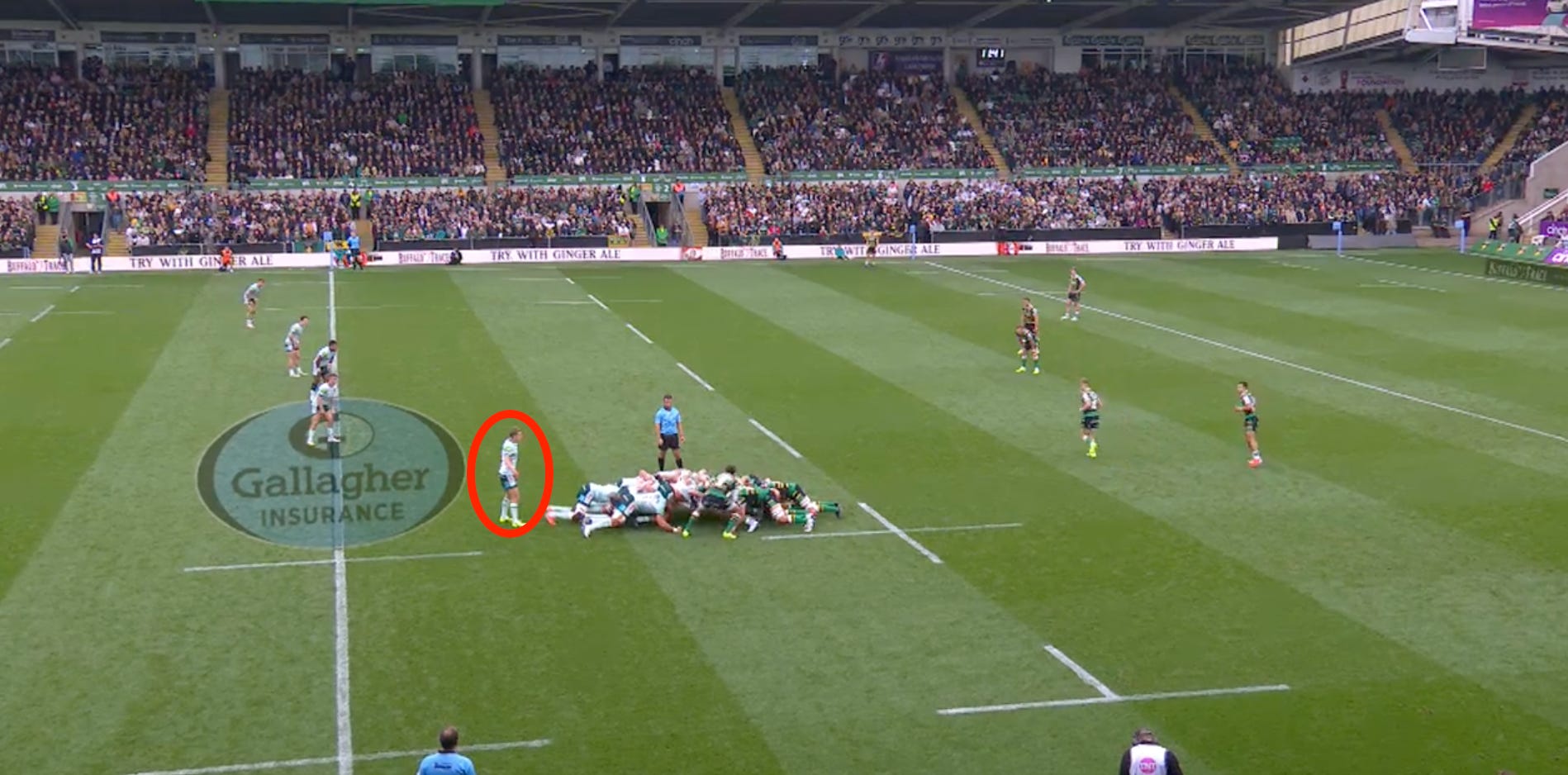
Scrum-Half Behind the Scrum - The biggest concern for the defence is how to cover the backfield to protect against a 50/22 without denuding your frontline defenders. Usually, the solution is to drop your fullback and one other - in this case a winger - so you have two deep defenders. That means that the scrum-half has to be an active defender. If they follow the scrum-half around the scrum then the sell themselves out should the attack pick and go on the other side or the scrum wheels and blocks off the nine. By standing behind, the scrum-half doesn’t put any pressure on the back of the scrum but they can support blind or open depending on where the attack goes.
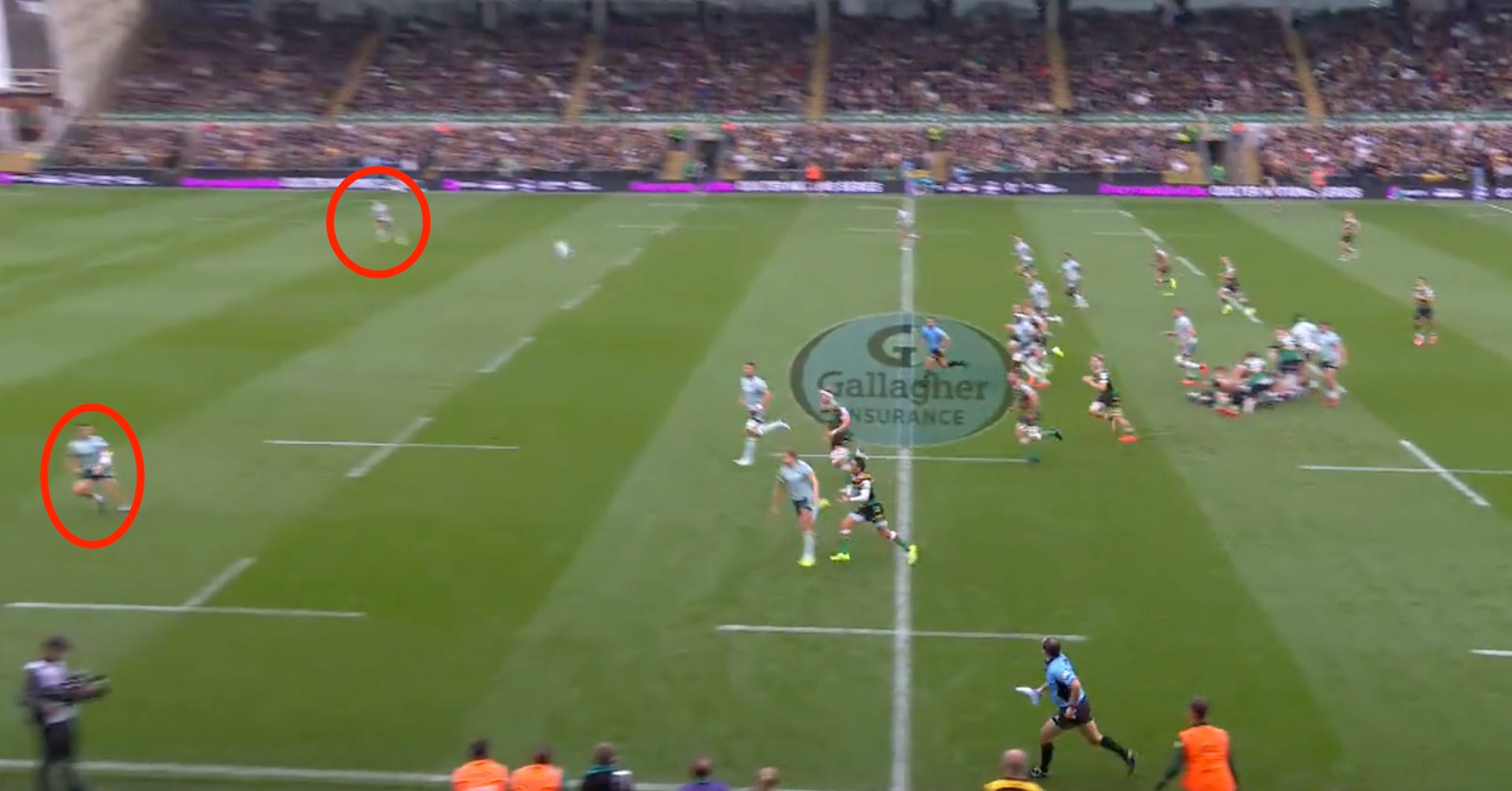
Two Deep Defenders - This is common generally now but particularly from these scrums. The two deep defenders should stop the 50/22 by covering the touchline. That opens up the middle of the pitch but that’s the hardest thing for the kick chase to cover. In the old-fashioned pendulum defence you would have one winger (the nearside one) pushed up into the line with the fullback tighter to the sideline and the far winger more or less in the middle of the pitch. That approach doesn’t work if the attack have a left and right footer in midfield who can just hit wherever the space is.
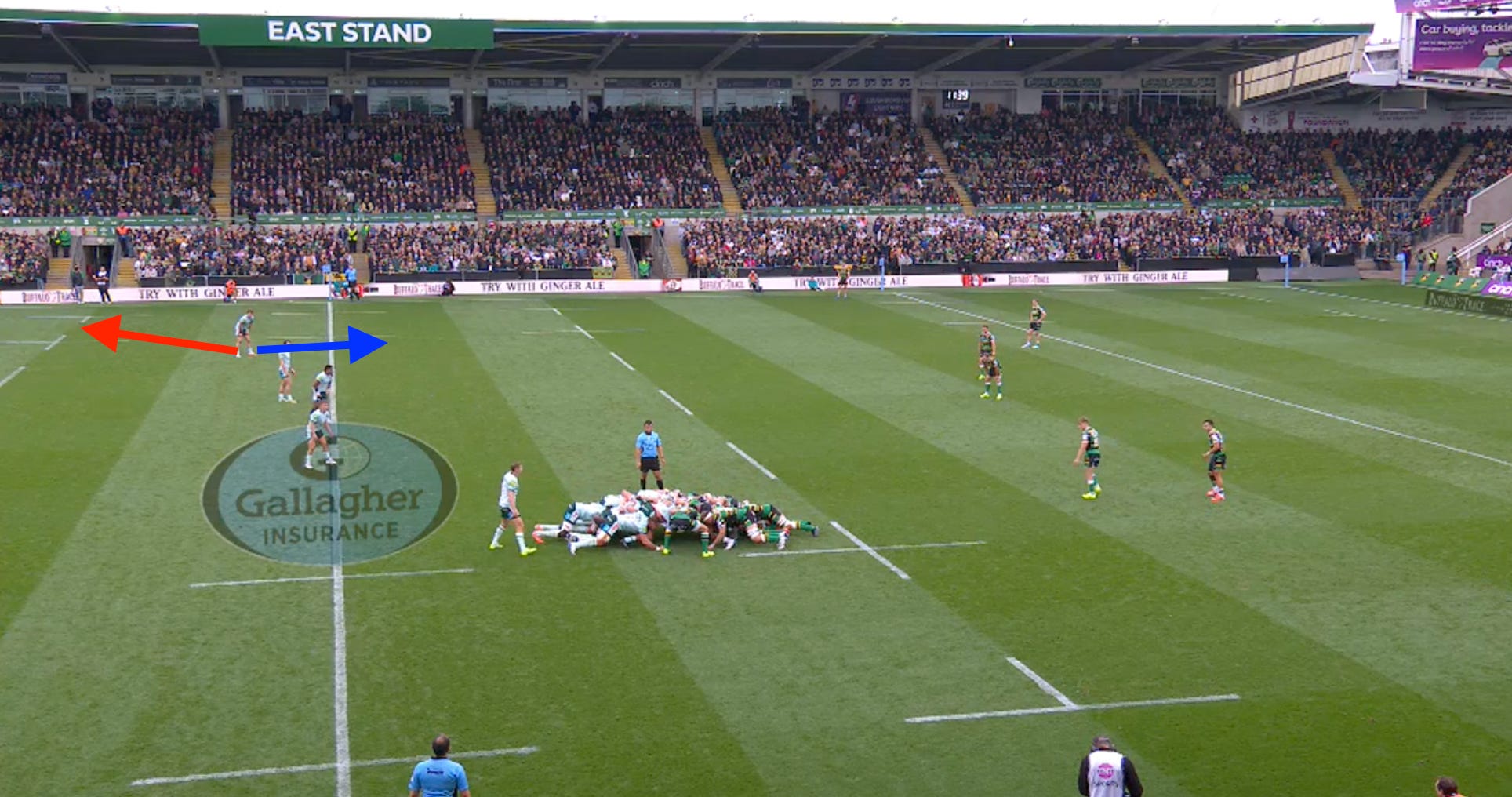
Wing Half-Depth - You want your five frontline defenders to play like six. That means the far winger, or widest player, plays at half-depth. That is neither in the defensive line nor in the backfield. If the attack look like they are kicking then the wide player can continue dropping back and supporting the backfield. If they look like they will attack wide then they can push up into the defensive line knowing there is kick cover behind. This wide player can start deeper to encourage the pass across the line or start closer to the line to encourage the kick.
In this first example, you can see how the attack systematically dismantles each of these areas. First of all, the scrum shifts right and that creates a bigger blindside and it ties in the entire Tigers’ backline. That means the Saints’ scrum-half has 16m of space to beat the Tigers’ scrum-half, which is a massive attacking advantage.
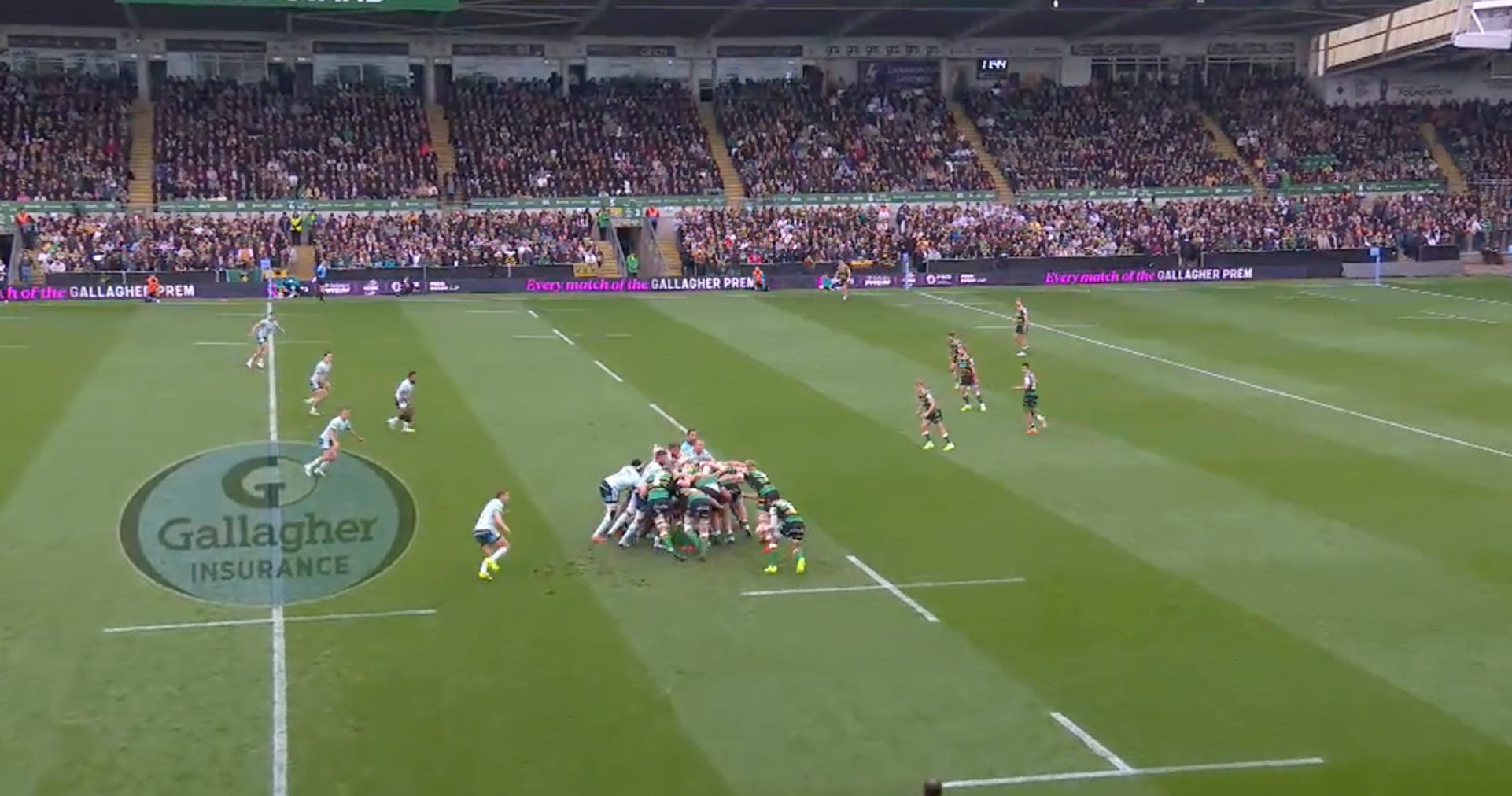
The scrum-half behind the scrum is an advantage for the attack in this situation because his job is to match the scrum-half. That means he begins following the scrum-half around the scrum and is then unable to stop him when he steps back the other way. Had he just stuck to the blindside then this space wouldn’t have opened up.
Then the half-break pulls the deep defender forward. This opens up space in behind for the kick which means the ball will definitely hit the grass. Once that happens it’s bad news for the defence. The kick here is made in the Saints’ half which means a good bounce can mean a try or a 50/22. The two deep approach means that the other defender isn’t close enough to impact play.
The risk of the kick to touch should be of less concern than the risk of a clean break - which converts at a higher rate. In this case, Montpellier massively sell out to stop the kick. Toulon exploit this by putting their winger right on the touchline (toes on the chalk). The brilliance of modern rugby players means that fly-halfs can get the ball to the wing via a flat cross kick so quickly that the deep defenders can’t cover him. Montpellier have opted to have a left winger up in the line to cover the two players directly behind the scrum for Montpellier. That means they are very under powered when the ball does go wide. In the end, Toulon can just run straight through the middle thanks to their overload in the midfield.
Montpellier ask their scrum-half to also cover the midfield. That is a massive defensive challenge, but if it works it allows them to both cover the kick and cover the pass. Just, in this case, it doesn’t work.
We can see that same approach for Pau here. The risk of a 50/22 is less because the scrum starts in the Pau half and therefore Pau have started with six defenders in the front line and just one deep to cover a kick over. Pau have tied one defender to the far right touchline and have asked their scrum-half to move into the midfield to act as an extra defender and ensure they have equal numbers. As we saw above though, that is a very tough ask if the first pass from the scrum is a good one.
This is almost certainly something Clermont identified during their analysis and so they targeted it with a pass into the midfield and then an inside step to target the scrum-half coming over.
Conclusion
The risk of a 50/22 has probably overall improved rugby but it has made the midfield scrum a total minefield defensively. You cannot cover all options as a defence and so you have to prioritise if you’re going to try and stop the carry or stop the kick. Whichever one you do, you will be asking a defender to do two jobs and as soon as that happens, the attack have a seam to try and weaken. But, if you don’t ask a defender to do two jobs then you find yourself unable to cover all the options. It is one of the most tactically exciting elements of the modern game.
Pre-Order Link - https://geni.us/AttackingTheSpace